

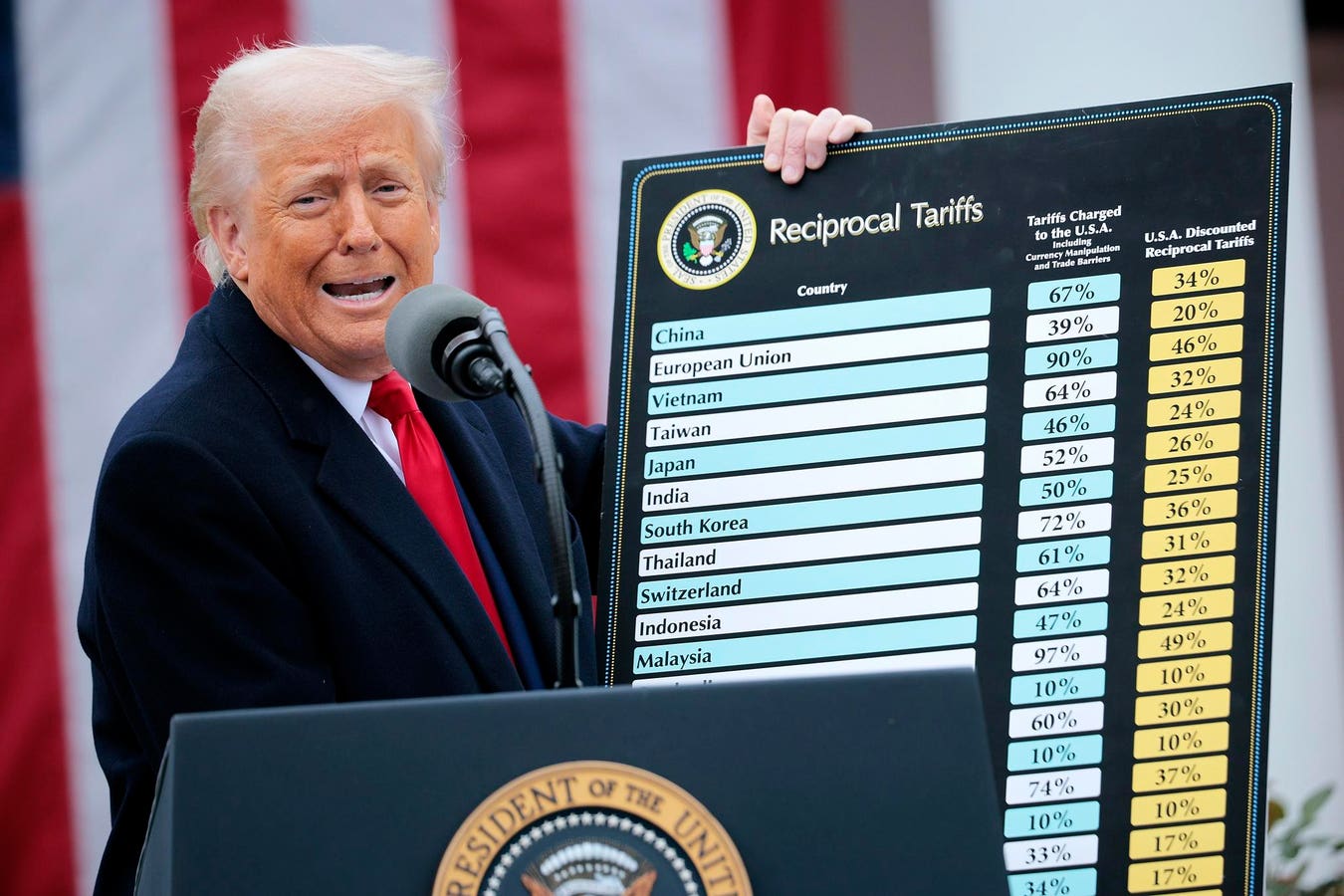
Last week, the start of the Trump administration’s tariffs sent many politicians, economists, and businesspeople into worry. Many markets took a beating.
But that is the least of concerns. Even after the worst of tumbles, markets tend to spring back within a year or two. By at noon on Monday — roughly five days after the April 2 tariff announcement — the major indexes, although still down compared to Friday’s closing figures, were up from the greater depths at which they opened. (That is probably because market professionals typically buy at dips when less disciplined investors sell shares in a panic and then they hold for later accumulated profit.)
The larger worry now is what will happen with underlying economies in the U.S. and around the world.
How Countries Use Tariffs Historically
Every country has an economy. So does the world through the interconnection of all these separate companies, international investments, currency exchanges, and global trade, to mention a few aspects.
It all comes together like a giant machine by Rube Goldberg, whose fanciful comic inventions inspired the old children’s board game Mouse Trap. It may seem clunky and could be improved, but at least it has worked and could have been a lot worse.
Tariffs are designed for a combination of reasons, including protecting domestic markets; inviting foreign investment; and becoming more effective using capabilities, inclinations, and talents in other parts of the world.
Trying to shut out competitors in certain markets isn’t unusual. One example is the high U.S. tariffs on sugar, driving consumer prices here to about double what the commodity costs in the rest of the world. That’s a remnant of a still ongoing cold war with Cuba. It’s also likely a reason many products like sodas here are sweetened with high fructose corn syrup, which drives down comparative costs.
However, the Trump administration has tried to equate equal tariffs to equal balance in trade, which is an inherently flawed concept. Companies use vendors all the time, whether they are in the same country or a different one. Gather together importers and exporters, treat them as the national equivalent of what the home country buys and sells, and you effectively have a giant enterprise. It buys from some places and not from others.
If you went to a store to buy something like lightbulbs, would you expect the store to buy things from you? Not unless you had something it needed at a price that was competitive. But that is essentially Trump’s view: The U.S. either must have an equivalence of trade or, one might guess, the superior position.
How These New Tariffs Could Affect The Economy
Markets will eventually come back. However, economies are slower to change. Tariffs are taxes on imports and are intended to reduce the practice. Countries collect tariffs from the importers, not from other countries.
Companies handle the additional expenses in one of four ways: absorbing the extra costs themselves, splitting the costs with the foreign vendors, passing them onto customers, or some combination. But there is usually going to be a price the customers pay.
There is also an indirect fifth effect: Companies that manufacture domestically might now have enough advantage over foreign competition to raise their prices.
The Federal Reserve Bank of Richmond has estimated that the average effective tariff rate in 2024 was 2.2%. After the layers of new tariffs, they estimate the AETR could rise to 17%. Call it a roughly 15% national sales tax that someone has to pay.
Prices rise, people pay more and given the broad range and heights of the tariffs the administration has imposed, not including Trump’s threat of an additional 50% charge on imports from China, the costs of doing business and living go up. That means inflation at the least, and most people have a recent grasp on what that means to their cost of living.
If it continues at a high enough level, consumers — who are responsible for 69% of gross domestic product, a common measurement of the economy — slow their spending. This can result in a pronounced retreat of the economy, called a recession.
J.P. Morgan Research has been raising its projection of whether a recession this year is likely from 30% at the beginning of 2025 to 40% in March. Now they’re at 60%.
Bloomberg reports that “Donald Trump’s global trade war is already priming financial markets for the next wave of corporate defaults.” If that happens, it’s further economic disruption and a loss of jobs. Amanda Goodall, CEO at workforce intelligence consultancy EdgePulse, posted a few days ago that hiring freezes are spreading in tech and consulting. February saw the highest number of layoffs since 2009, during the Great Recession.
There is strong potential for some very tough economic times going forward, regardless of what the stock market does.
Read the full article here