

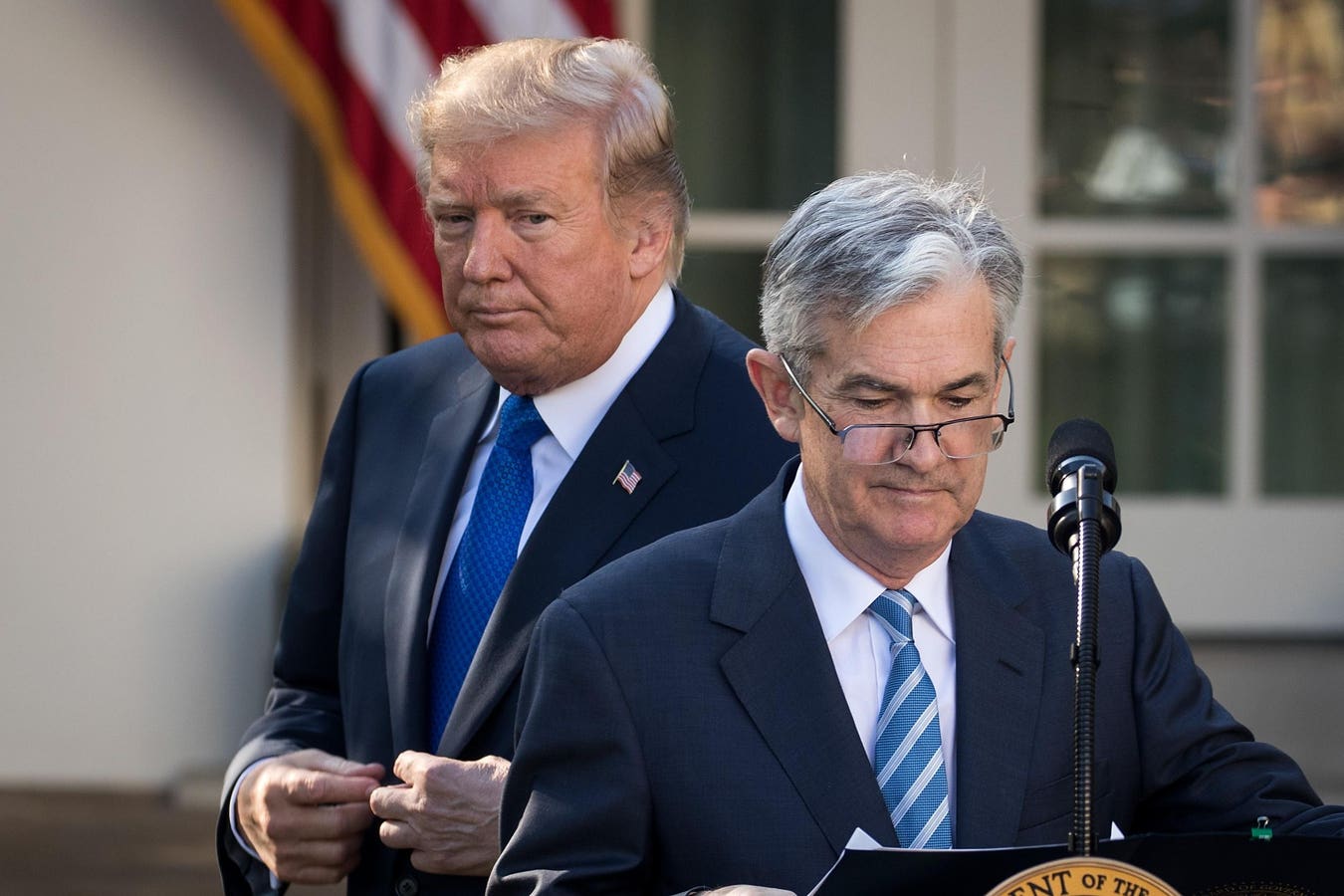
The second Trump administration is headed for a colossal collision with the Federal Reserve. Make no mistake, almost all of the media will be siding with Fed head Jerome Powell and his institution. They will parrot the central bank’s party line that any attack is a highly dangerous assault on its indepen- dence—and a formula for future inflation.
Don’t buy this baloney.
The looming big battle isn’t about the Fed’s independence; it’s about the performance of our central bank. More particularly, it’s about the models on which it bases its decisions. The core premise of these models is that pros- perity causes inflation. An economist named A.W. Phillips posited that there’s trade-off between inflation and unemployment. Want less unemployment, you’ll get higher inflation. And vice-versa.
The so-called Phillips curve is holy writ at the Fed and most other central banks. There are two big flaws with this, in addition to being belied by what’s happened in the actual world. The curve is wrong.
During recent years, for instance, unemployment in the U.S. remained low, even as we experienced the worst rise in the cost of living in more than 40 years.
The Fed is flummoxed but refuses to do a searing self-examination of its core belief. Admitting that its theology is wrong is hard for any institution, so the central bank clings to its bogus catechism.
The first big flaw is the Federal Reserve’s refusal to make the basic distinction between the two kinds of inflation.
Nonmonetary inflation comes from major disruptions to production. A natural disaster, such as an earthquake, will send prices up, as will the dislocations of war, not to mention the Covid lockdowns. Regulations and taxes can send costs up as well. There’s nothing the Fed can do about nonmonetary inflation. Jacking up interest rates won’t cure bottlenecks at ports.
Monetary inflation comes from lowering the value of a currency, usually by creating too much of it. In other words, the cure for monetary inflation isn’t slowing down or depressing the economy; it’s stabilizing the value of a currency. After all, money measures value the way a clock measures time or a ruler measures length. Yet neither the Fed nor other central banks ever mention currency stability.
This brings us to the second big flaw: the absurd and destructive belief that a vibrant economy must be slowed down. Concomitant with this insane notion is the idea that a central bank can actually and constructively guide economic activity by manipulating interest rates. If you think about it, this is similar to rent control. In this case, what’s being rented isn’t an apartment, but money.
And now we’ve arrived at why the next Trump administration is headed for a huge battle with the Fed. Powell and his colleagues will be warning that the Trump agenda will reignite inflation and that eventually the central bank may have to hike interest rates.
“Fiscal sustainability,” Powell now proclaims. This is rather rich coming from a man who, desiring reappointment by President Biden, stayed silent while the White House and Congress went on a spending binge that sent deficits into the stratosphere.
For starters, the Trump team should start to make the case for why the Fed’s models are wrong and then set out to intellectually slay the Phillips curve dragon.
Read the full article here